Língua Inglesa 7º ano Prova
Histórias de vida da comunidade: ler e contar
Prova com 10 questões sobre uma entrevista em inglês com uma rendeira do Ceará: compreensão, perguntas no passado, sequência e causa, opinião e relato de vida.
- 10 questões
- cerca de 50 minutos
Língua Inglesa, 7º ano: Histórias de vida da comunidade: ler e contar
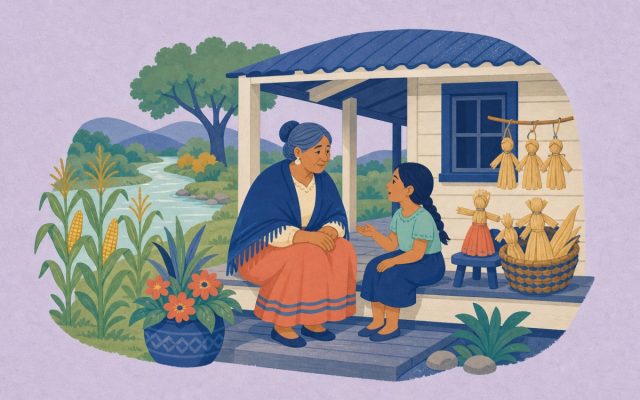
Leia a entrevista que Tainá fez para um trabalho da escola.
Tainá: Where were you born, Dona Benedita?
Dona Benedita: I was born in a small fishing village in Ceará, in 1951.
Tainá: What did you do when you were a child?
Dona Benedita: I helped my mother at home. In the afternoons, I sat with my grandmother and watched her make bobbin lace.
Tainá: When did you start making lace?
Dona Benedita: I started when I was nine. My first piece was ugly, but my grandmother kept it!
Tainá: Did you go to school?
Dona Benedita: Yes, but only for four years. The school was far, so I walked for an hour every day.
Tainá: What do you do today?
Dona Benedita: I teach lacemaking to girls and boys from the community. I want our tradition to stay alive.
Onde Dona Benedita nasceu?
- Em uma pequena vila de pescadores no Ceará.
- Em uma cidade grande perto da escola de Tainá.
- Em uma fazenda no interior de Minas Gerais.
- Na casa da avó de Tainá, em 1951.
Releia a entrevista.
Tainá: Where were you born, Dona Benedita?
Dona Benedita: I was born in a small fishing village in Ceará, in 1951.
Tainá: What did you do when you were a child?
Dona Benedita: I helped my mother at home. In the afternoons, I sat with my grandmother and watched her make bobbin lace.
Tainá: When did you start making lace?
Dona Benedita: I started when I was nine. My first piece was ugly, but my grandmother kept it!
Tainá: Did you go to school?
Dona Benedita: Yes, but only for four years. The school was far, so I walked for an hour every day.
Tainá: What do you do today?
Dona Benedita: I teach lacemaking to girls and boys from the community. I want our tradition to stay alive.
Com quantos anos Dona Benedita começou a fazer renda?
- Com 4 anos
- Com 19 anos
- Com 9 anos
- Com 51 anos
Use o texto da questão 2.
Com quem Dona Benedita aprendeu a fazer renda, segundo a entrevista?
- Com a mãe, na escola da vila
- Com a avó, observando-a trabalhar
- Com Tainá, em um curso
- Com os pescadores da vila
Use o texto da questão 2.
Por que Dona Benedita caminhava uma hora por dia?
- Because the school was far.
- Because she liked walking.
- Because she sold lace.
- Because she went fishing.
Complete com o passado do verbo sit: In the afternoons, I ___ with my grandmother.
- sitted
- seat
- sits
- sat
Tainá quer fazer mais uma pergunta a Dona Benedita sobre o passado. Qual pergunta está correta?
- Do you liked school?
- Did you liked school?
- Were you like school?
- Did you like school?
Qual frase mostra uma relação de causa e consequência?
- The school was far, so she walked a lot.
- She was born in 1951 in Ceará.
- She sat with her grandmother.
- First she helped, then she sat.
Releia a entrevista.
Tainá: Where were you born, Dona Benedita?
Dona Benedita: I was born in a small fishing village in Ceará, in 1951.
Tainá: What did you do when you were a child?
Dona Benedita: I helped my mother at home. In the afternoons, I sat with my grandmother and watched her make bobbin lace.
Tainá: When did you start making lace?
Dona Benedita: I started when I was nine. My first piece was ugly, but my grandmother kept it!
Tainá: Did you go to school?
Dona Benedita: Yes, but only for four years. The school was far, so I walked for an hour every day.
Tainá: What do you do today?
Dona Benedita: I teach lacemaking to girls and boys from the community. I want our tradition to stay alive.
Qual sequência de fatos está na ordem em que aconteceram?
- Começou a fazer renda, nasceu, hoje ensina, observava a avó.
- Hoje ensina, observava a avó, nasceu, começou a fazer renda.
- Nasceu, observava a avó, começou a fazer renda, hoje ensina.
- Observava a avó, hoje ensina, começou a fazer renda, nasceu.
Na roda de conversa sobre a entrevista, qual comentário expressa uma opinião justificada sobre o texto?
- Dona Benedita was born in 1951 in a small fishing village in Ceará.
- The interview has five questions and five answers.
- I think she is inspiring, because she teaches our traditions.
- Ceará is a state in the Northeast of Brazil.
Entreviste uma pessoa mais velha da sua família ou do seu bairro.
a) Escreva quatro perguntas em inglês no passado (use Where, What, When e Did).
b) Depois da entrevista, escreva um pequeno relato em inglês (5 a 6 frases) sobre a vida dessa pessoa, usando pelo menos dois destes conectores: first, then, after that, because, so.
ProvaPiloto · provapiloto.com.br
Gabarito comentado

Já usou com a sua turma?
Conte com um toque. Isso ajuda outros professores a escolher.
Usei em sala Entre na sua conta para contar.